I am involved in several international activities about lifelogging.
LSC – Lifelog Search Challenge
Due to the availability of cheap sensor devices, lifelogging has become increasingly important over the last years. A lifelog captures almost every single moment of a lifelogger and can be used for several purposes, such as a simple collection of the most important events in your life, or as a visual prosthesis for elderly people.
The Lifelog Search Challenge (LSC) is an annual international content-search competition that is performed on lifelogging data. The LSC is organized by a large international team (Cathal Gurrin, Björn Þór Jónsson, Duc-Tien Dang-Nguyen, Jakub Lokoc, Klaus Schoeffmann, Minh-Triet Tran, Steve Hodges, Graham Healy, Luca Rossetto, and Werner Bailer) and attracts teams from all around the world (e.g., Austria, Czechia, Germany, Iceland, Ireland, Italy, Netherlands, Norway, Portugal, Switzerland, and Vietnam). The competition tests how fast and accurate state-of-the-art lifelog retrieval systems can solve search tasks (known-item search, ad-hoc search, visual question answering) in a shared dataset of about 720000 images, collected by an anonymous lifelogger over 18 months. It usually takes places as a workshop at the ACM International Conference on Multimedia Retrieval (ICMR) and has successfully grown over the last few years. The LSC workshop is now in its ninth year:
- LSC’26 – Amsterdam, The Netherlands
- LSC’25 – Chicago, US – Hybrid Event.
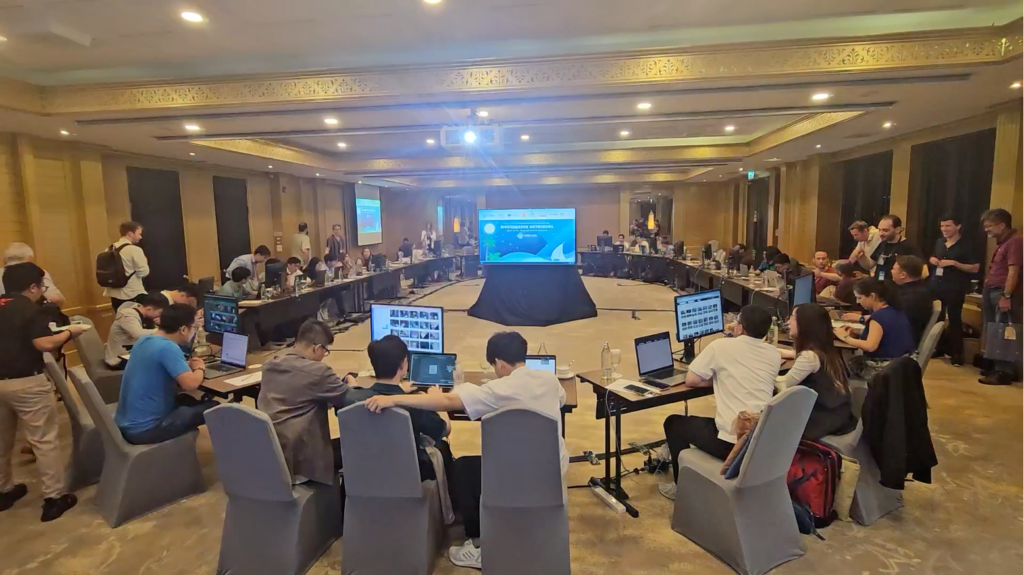
- LSC’24 – Phuket, Thailand.
- LSC’23 – Thessaloniki, Greece.
- LSC’22 – Newark, NJ – Hybrid Event.
- LSC’21 – Taipei, Taiwan – Virtual Event.
- LSC’20 – Dublin, Ireland – Virtual Event.
- LSC’19 – Ottawa, Canada.
- LSC’18 – Yokohama, Japan.
More information about the LSC can be found here.
LSC 2025:
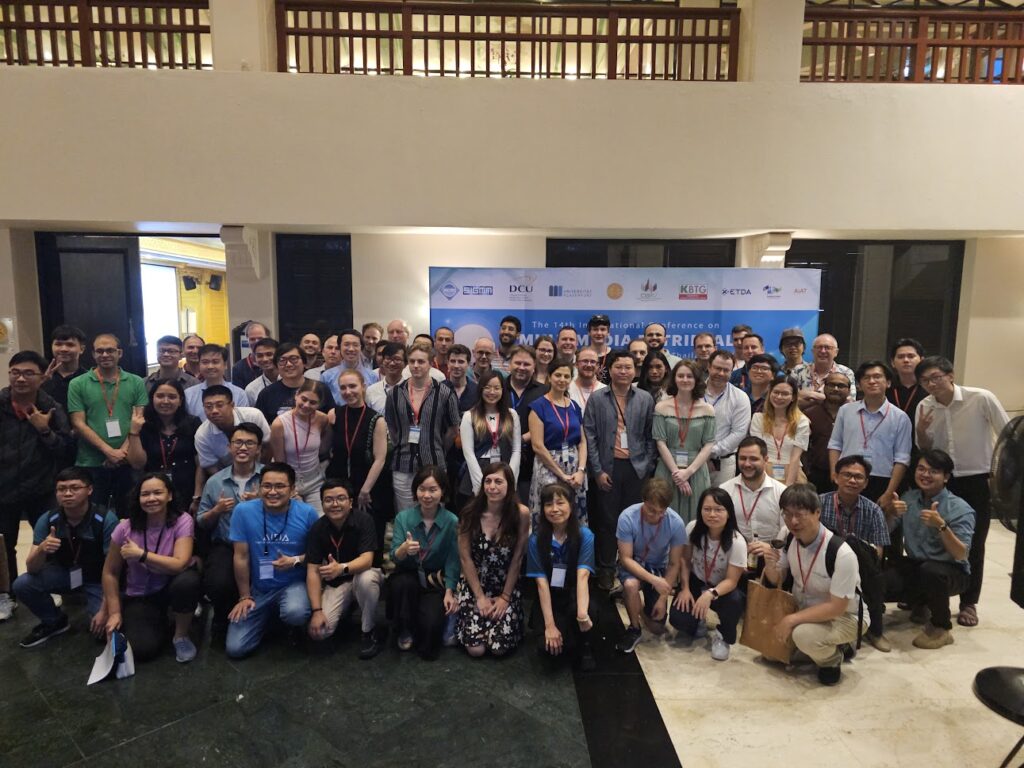
LSC 2024:
lifeXplore – Our Lifelog Retrieval Tool
lifeXplore is the lifelog retrieval tool implemented by Klagenfurt University (Martin Rader, Mario Leopold, and Klaus Schoeffmann). lifeXplore was awarded as the Best LSC System at LSC 2025 and 2024.
CASTLE 2024 – A Collaborative Effort to Create a Lifelog Dataset
CASTLE 2024 was a collaborative effort to create a PoV 4K video dataset recorded by a dozen people in parallel over several days. The participating content creators wore a GoPro and a Fitbit for approximately 12 hours each day while engaging in typical daily activities. The event took place in Ballyconneely, Ireland, and lasted for four days. The resulting data is publicly available and can be used for papers, studies, and challenges in the multimedia domain in the coming years. A preprint of the paper presenting the resulting dataset is available on arXiv (https://arxiv.org/abs/2503.17116).
CASTLE was an event funded by ACM SIGMM event and a report about it is available here.